
Listen to the article
By Kelli Nesbitt, Parks & Recreation Marketing Coordinator
The results are in, and the Brazos Valley made a big impact during the 2026 City Nature Challenge!
For four days in late April, residents and nature enthusiasts across Brazos, Burleson, Grimes, Lee, Madison and Robertson counties documented plants, animals and fungi as part of the worldwide community science event. The identification phase continued through May 10, allowing community members, naturalists and scientists to help identify and verify the observations collected during the four-day challenge.
The Brazos Valley project ranked among the top 8% of 747 projects worldwide, placing:
- No. 60 globally for observations
- No. 42 globally for species recorded
- No. 61 globally for observers
More than 410 observers and 690 identifiers contributed to the challenge, recording more than 11,500 observations and 2,010 species across the six-county region. The project also had a 100% verifiable observation rate.

Turning Observations into Data
One of the most important measures of the challenge is observation quality. 52% of observations reached Research Grade, meaning they included photo or sound evidence of sufficient quality to support a species-level identification by most identifiers.
The challenge also added 147 new species records to iNaturalist and increased iNaturalist observations in the project’s metro counties by 5%.
These observations become part of a growing database that scientists, naturalists, and conservationists can use to better understand species distributions, biodiversity, and conservation needs.
Documenting Conservation Concerns
The City Nature Challenge also helped document species considered Species of Greatest Conservation Need in Texas. During the 2026 challenge, 24 species in this category reached Research Grade in the Brazos Valley project.
The official species list includes:
- American Bumble Bee (Bombus pensylvanicus)
- Buff-breasted Sandpiper (Calidris subruficollis)
- Chimney Swift (Chaetura pelagica)
- Chuck-will’s-widow (Antrostomus carolinensis)
- Comanche harvester ant (Pogonomyrmex comanche)
- Common Grackle (Quiscalus quiscula)
- Common Nighthawk (Chordeiles minor)
- Dunlin (Calidris alpina)
- Eastern Meadowlark (Sturnella magna)
- Grasshopper Sparrow (Ammodramus savannarum)
- Greater Yellowlegs (Tringa melanoleuca)
- Green Heron (Butorides virescens)
- Little Blue Heron (Egretta caerulea)
- Loggerhead Shrike (Lanius ludovicianus)
- Long-billed Dowitcher (Limnodromus scolopaceus)
- Mississippi Silvery Minnow (Hybognathus nuchalis)
- Prothonotary Warbler (Protonotaria citrea)
- Red-headed Woodpecker (Melanerpes erythrocephalus)
- Sanderling (Calidris alba)
- Savannah Sparrow (Passerculus sandwichensis)
- Smooth Softshell (Apalone mutica)
- Stilt Sandpiper (Calidris himantopus)
- Texas Map Turtle (Graptemys versa)
- Yellow-billed Cuckoo (Coccyzus americanus)
An especially significant finding is that every Species of Greatest Conservation Need recorded during the Brazos Valley City Nature Challenge can be found at Lick Creek Park. This highlights the importance of protecting natural areas that provide habitat for a wide variety of species.
A Community Effort
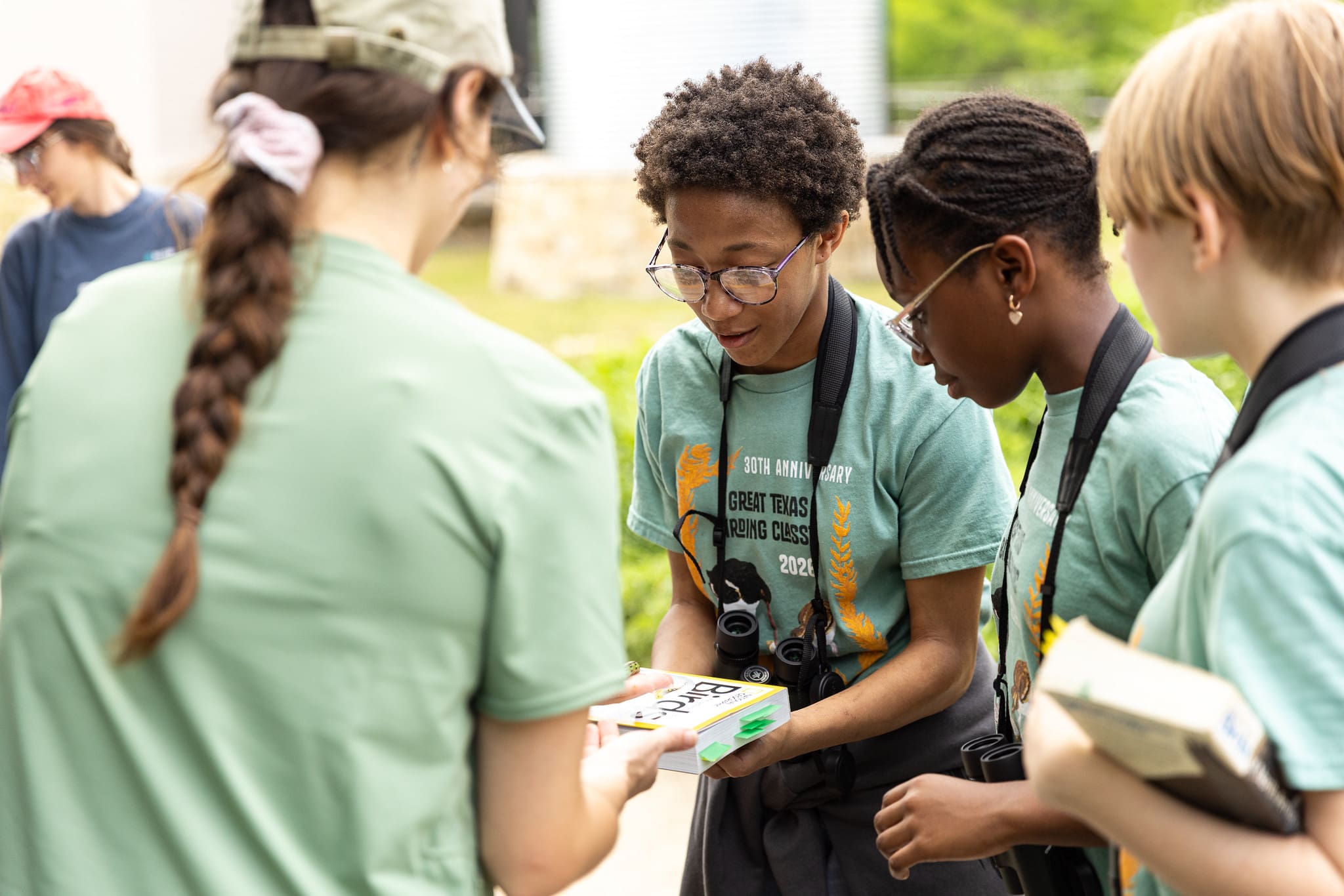
The challenge kicked off locally with Bio Blitz at the Gary Halter Nature Center, bringing community members together with the Texas A&M Chapter of the Society for Conservation Biology and local naturalist teams to explore Lick Creek Park and document the plants and animals they found.
But the work does not have to stop when the City Nature Challenge ends.
Anyone can continue contributing to biodiversity research by using the free iNaturalist app to document wild plants, animals and fungi. Each observation adds to our understanding of the natural world and can help researchers track species and inform conservation efforts.
Thank you to everyone who explored, photographed, recorded, identified and shared observations during the 2026 City Nature Challenge. Together, the Brazos Valley turned nature sightings into real scientific data and showed just how much biodiversity can be found right here at home.
For more information, visit cstx.gov/CityNatureChallenge or call 979-764-6216.

About the Blogger
Kelli Nesbitt has served the Parks and Recreation Department for 20 years, including 13 years as marketing coordinator. She also served a year and a half as the marketing and community engagement specialist for the City of Bryan from 2023-25. A Bryan native, Nesbitt earned a bachelor’s degree in health and kinesiology from Sam Houston State.
If you liked this post, share it with the buttons below!
Leave a Reply